Jowar Prices Touch Record Rs 100 per Kg in Karnataka, Hotels and Consumers Feel the Heat
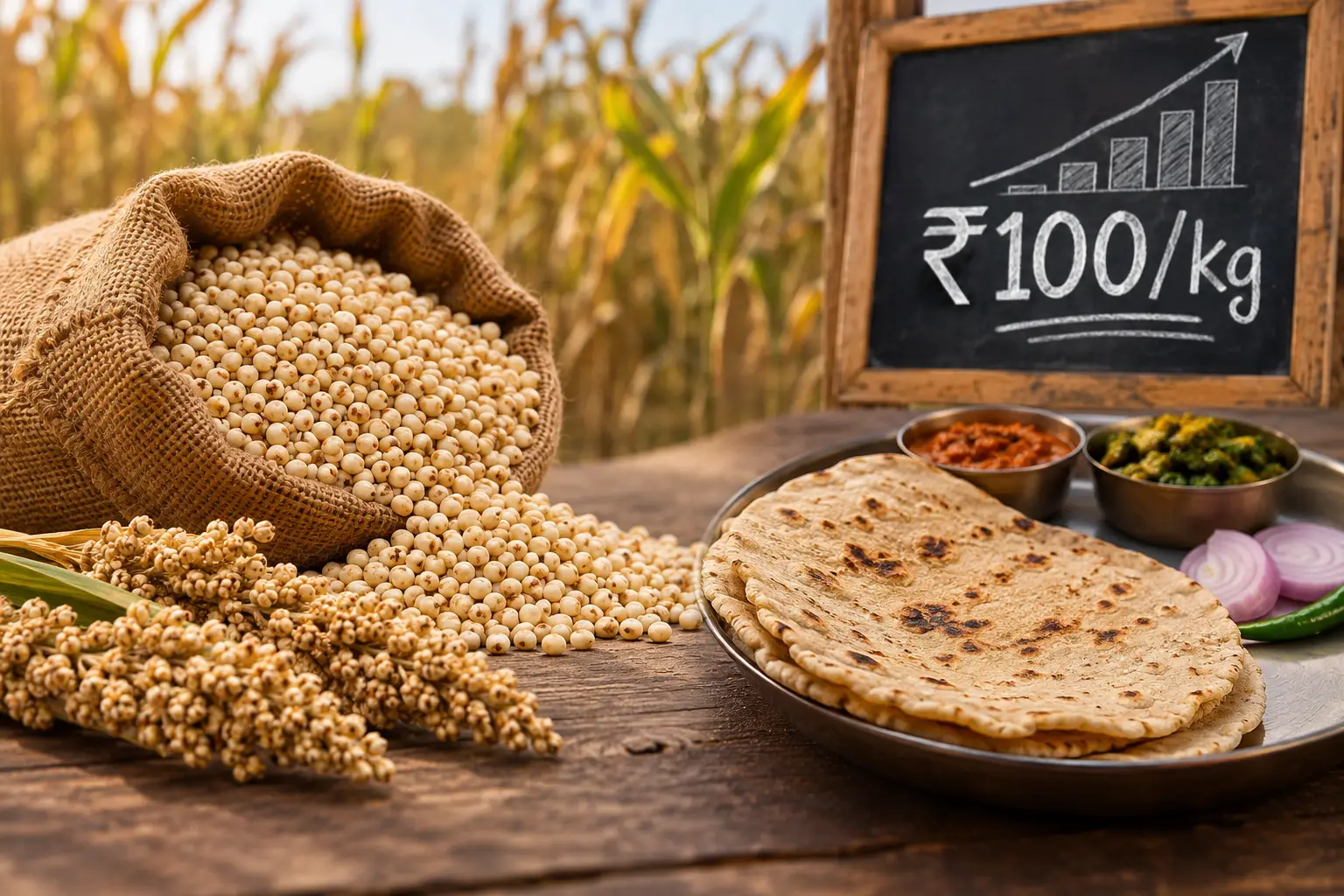
Hubballi: Jowar prices have reportedly touched Rs 100 per kg in Karnataka for the first time, putting pressure on consumers, farmers, and hotel owners, particularly across North Karnataka, where jowar roti is an essential part of the local food culture.
A traditional North Karnataka meal is considered incomplete without jowar roti or sajja (pearl millet) roti. However, the sharp rise in prices has made it increasingly difficult for hotels and small eateries to manage their operational costs.
According to APMC sources, jowar, which was previously priced at around Rs 5,000 per quintal, has now reached Rs 10,000 per quintal. The retail price, which remained between Rs 40 and Rs 50 per kg over the last two years, has increased sharply in the past two months. The recent drought conditions
have been cited as one of the major reasons behind the price rise.
Jowar is one of the major traditional crops of North Karnataka and was once cultivated across lakhs of hectares. However, many farmers are now shifting towards commercial crops in search of better profits, resulting in a decline in jowar cultivation.
Meanwhile, sajja prices have also increased. Previously sold at around Rs 2,000 per quintal, pearl millet is now priced between Rs 3,000 and Rs 3,700 per quintal.
Hotels Struggle to Manage Rising Costs
The price surge has created difficulties for hotels and small eateries that serve jowar roti as a staple food.
Earlier, a jowar roti was generally priced at around Rs 10. However, rising raw material costs have made it difficult for hotel owners to maintain the same prices.
Some eateries have reportedly started mixing rice flour with jowar flour to reduce production costs.
Katak roti, which was earlier sold for Rs 8, is now priced between Rs 10 and Rs 12 in some local markets.
A local roti seller in Hubballi said, "If jowar prices continue to increase, it will become very difficult for us to manage our business expenses."
Ration Supply Also Affected
The increase in jowar prices has also reportedly affected its distribution through ration shops.
For the past four months, ration shops had been distributing jowar to beneficiaries. Under the scheme, eligible beneficiaries were receiving 3 kg of jowar.
However, with market prices increasing in recent days, the distribution of jowar has reportedly been stopped, and rice distribution has resumed.
A Growing Concern for North Karnataka
The rising cost of jowar is not just an economic concern but also a cultural issue for North Karnataka, where jowar roti remains an important part of everyday food habits.
With cultivation declining, drought conditions affecting production and market prices increasing, consumers and hotel owners are facing the burden of higher costs.
The situation has once again highlighted the need to support traditional millet cultivation and ensure a stable supply of essential food grains.
Conclusion
The sharp rise in jowar prices to ₹100 per kg highlights the growing challenges faced by farmers, consumers, and hotel owners across North Karnataka. Declining cultivation, drought conditions, and increasing production costs have put pressure on the supply of this traditional staple grain. As jowar roti remains an important part of North Karnataka’s food culture, supporting local farmers, encouraging millet cultivation, and ensuring a stable supply of grains are essential. Timely measures are needed to make jowar affordable and preserve this valuable food tradition for future generations.
Share Article
Recent Posts
-
 Jowar Prices Touch Record Rs 100 per Kg in Karnataka, Hotels and Consumers Feel the Heat
-
 Describing the Words
-
 Intimacy After 40: The Conversations Couples Avoid
-
 The Pressure to Perform: When Teenage Boys Feel They Must Always Be Strong
-
 The Unpaid CEO of the Home: Why Women Manage More Than Household Chores