How Electric Vehicles Can Help Reduce Air Pollution in Indian Cities
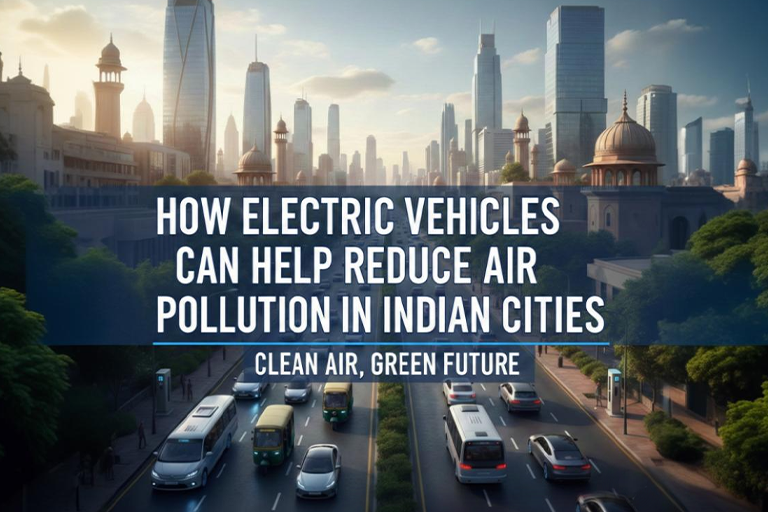
As we know that Electric Vehicles (EV’s) do not have tailpipe (silencer)which produces harmful pollutants like , nitrogen oxides (NO₂), and carbon monoxide (CO).
The Electric Vehicles do not have Internal Combustion Engines. The two wheelers, three wheelers, e-rickshaw, four-wheeler and electric buses reduce urban smog, there will be no sound pollution and there will be 30 to 35 % of decrease in pollution which helps in improving public health.
Key Ways EVs Reduce Air Pollution in Indian Cities:
No Tailpipe (Silencer):
As petrol or diesel vehicles have tailpipe (silencer), but we do not find it in EV’s and it does not release any smoke while driving, which is very important in highly populated Indian cities. Pollution at street level decreases, Improved air quality in traffic-heavy areas.
Reduced Particulate Matter (PM2.5, NO):
By eliminating very old vehicles especially two wheelers, diesel buses, old diesel trucks from the road, EV’s significantly reduces the emission of toxic gases which affects the quality of the air.
Combating VOCs and Smog:
If more Electric Vehicles come in market there will significant reduction of non-methane volatile organic compounds (VOCs). We can reduce VOC up to 90% by 2030. There will be reduction of smog also. EVs can reduce greenhouse gas emissions by 20–40% compared to petrol cars (depending on grid mix).
Lower Overall Carbon Footprint:
Even when considering the electricity grid mix, EVs have a lower lifecycle carbon footprint compared to conventional vehicles.
Noise Pollution:
As EV’s do not has engines, it doesn’t make sound and it runs silently, directly it reduces the noise pollution in urban areas.
Eco-Friendly Charging:
Using renewable energy resources like solar helps in environmental benefits.
Impact on Public Health:
As diesel and petrol pollutes air it has major impact on health of people, they are breathing polluted air which impacts their respiratory system and they are prone to other health issues due to air pollution. EV’s help in cleaner air, which helps public health. Reduces long-term healthcare costs
What About Electricity from Coal?
India still generates a large portion of electricity from coal.
- If EVs are charged using coal-based power, pollution shifts from cities to power plants.
- However, even with coal-heavy electricity, EVs are generally more efficient and emit less total pollution per kilometre than petrol/diesel vehicles.
- As India increases renewable energy (solar and wind are growing rapidly), EVs will become even cleaner.
Conclusion:
Cities like Delhi, Pune, and Bengaluru are already experiencing the benefits of electrified public transport and private mobility, moving toward a cleaner, more sustainable transportation ecosystem, it also lowers oil imports.
Yes, electric vehicles help reduce air pollution in India, especially in cities. Their environmental benefits will grow as India shifts toward more renewable energy.