Consent, Respect, and Healthy Relationships: Conversations Every Teenage Boy Needs
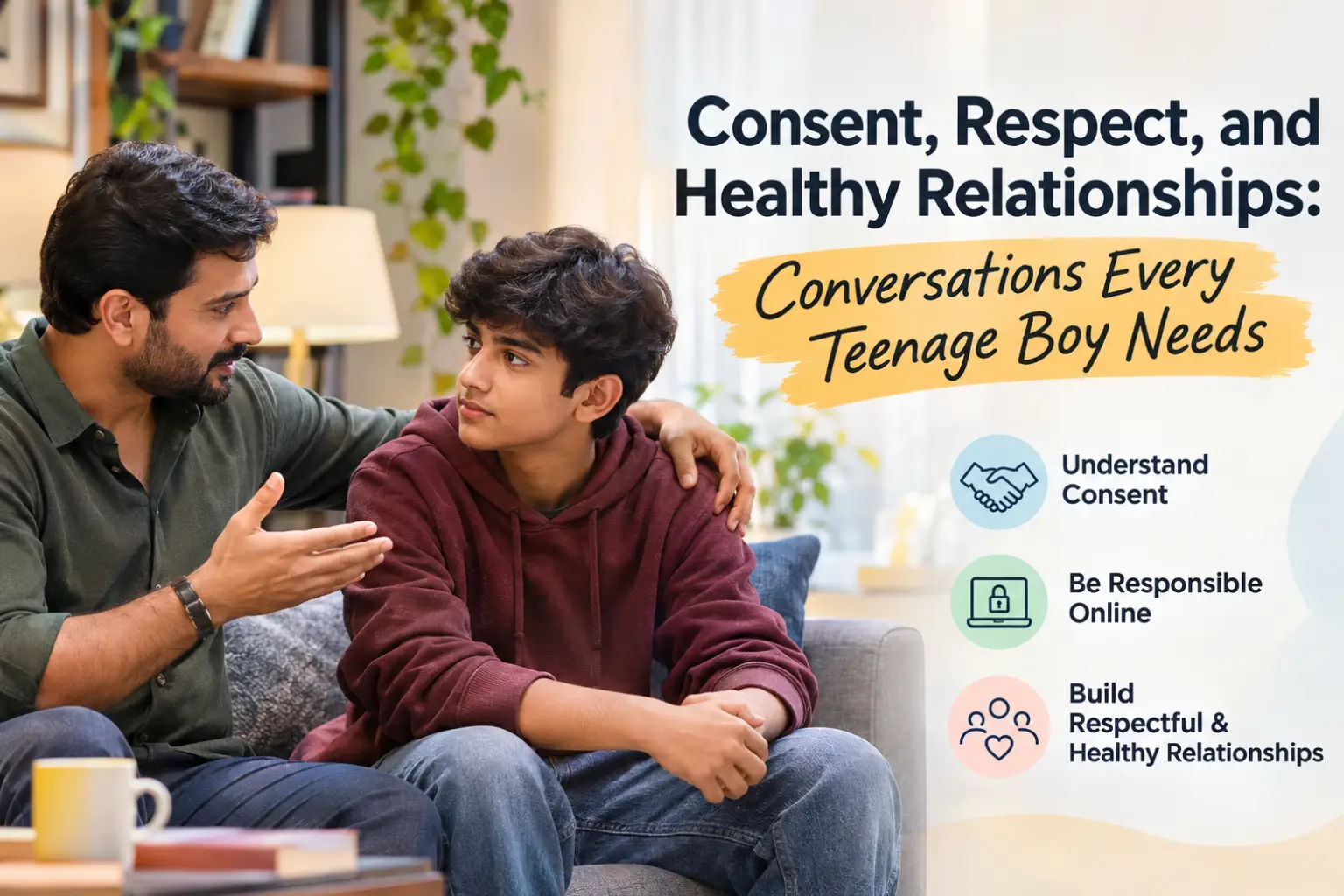
As parents and mentors, we spend years teaching our sons how to succeed in the world. We guide them through academic targets, athletic training, career choices, and personal discipline.
Yet, one of the most critical life skills often gets sidelined or reduced to a single, awkward, clinical lecture: how to build healthy, respectful, and consensual relationships.
In a world saturated with hyper-sexualized media, online pop-culture influences, and locker-room banter, teenage boys are bombarded with conflicting signals about what it means to be a man. If we do not actively teach them empathy, boundary-awareness, and emotional respect, the internet and peer pressure will fill the void.
Raising respectful young men requires moving past vague warnings. It means having clear, ongoing, and grounded conversations about consent, digital boundaries, and genuine mutual respect.
The Modern Framework of Consent
Too often, consent is framed negatively—as a list of legal boundaries or things to avoid. To a teenage boy, this approach can feel confusing or defensive.
We need to reframe consent positively, as the foundation of emotional intelligence and self-respect:
- Consent Is Active, Not Passive: Silence, hesitation, or “maybe” does not mean yes. A healthy relationship relies on enthusiastic, mutual agreement at every step.
- Consent Spans Digital Spaces: In the digital age, respect extends to smartphones. Sharing private messages, screenshots, or photos without explicit permission is a severe violation of trust and privacy.
- Consent Means Accepting “No” Gracefully: A young man’s character is defined by how he responds to rejection. Learning that a boundary is not a personal attack is a fundamental mark of emotional maturity.
A Real-Life Example: The Group Chat Reality Check
Consider Kabir, a 15-year-old high school student who belonged to a close-knit friend group.
One evening, a casual private photo of a female classmate was shared in their group chat, accompanied by teasing comments and jokes. Several boys added laughing emojis and forwarded the message further.
Kabir felt an immediate knot in his stomach. He knew the girl hadn’t given permission for her photo to be shared, but he felt intense peer pressure to conform and join the banter to avoid looking “weak” or “uncool.”
Fortunately, Kabir’s mother had established a habit of open, low-pressure evening chats. Noticing Kabir was quiet and distracted at dinner, she asked if anything was bothering him.
When Kabir cautiously shared what happened in the group chat, his mother didn’t react with anger or panic. Instead, she asked a grounded question: “If you were in that girl’s position, or if someone shared your private moments without asking, how would you feel?”
The realization hit Kabir immediately. “I’d feel betrayed,” he admitted softly.
His mother validated his perspective: “Doing the right thing requires far more courage than going along with the crowd. True strength is protecting someone’s dignity when everyone else is laughing.”
Supported by that conversation, Kabir muted the group chat, privately deleted the image, and reached out to the group admin asking them to take the photo down. He chose quiet integrity over locker-room peer pressure.
3 Core Pillars for Guidance
- Model Respect at Home: Boys observe how adults treat each other, handle disagreements, and respect personal space. Demonstrating active listening and healthy boundary-setting at home sets the baseline for their external relationships.
- Discuss Digital Responsibility Early: Have explicit conversations about online privacy, image sharing, and cyberbullying. Remind them that digital actions carry real-world emotional and legal consequences.
- Teach Emotional Nuance: Encourage young men to express feelings beyond anger or humor. When boys understand their own emotions, they become significantly better at recognizing and respecting the feelings of others.
Conclusion
Teaching teenage boys about consent and healthy relationships isn’t about restricting their freedom; it is about equipping them with the wisdom to build deep, meaningful human connections.
When we guide our sons with clarity, empathy, and patience, we do not just protect young women or prevent mistakes. We raise grounded, emotionally mature men who understand that real strength lies in kindness, integrity, and unwavering respect.
Share Article
Recent Posts
-
 Jowar Prices Touch Record Rs 100 per Kg in Karnataka, Hotels and Consumers Feel the Heat
-
 Describing the Words
-
 Intimacy After 40: The Conversations Couples Avoid
-
 The Pressure to Perform: When Teenage Boys Feel They Must Always Be Strong
-
 The Unpaid CEO of the Home: Why Women Manage More Than Household Chores