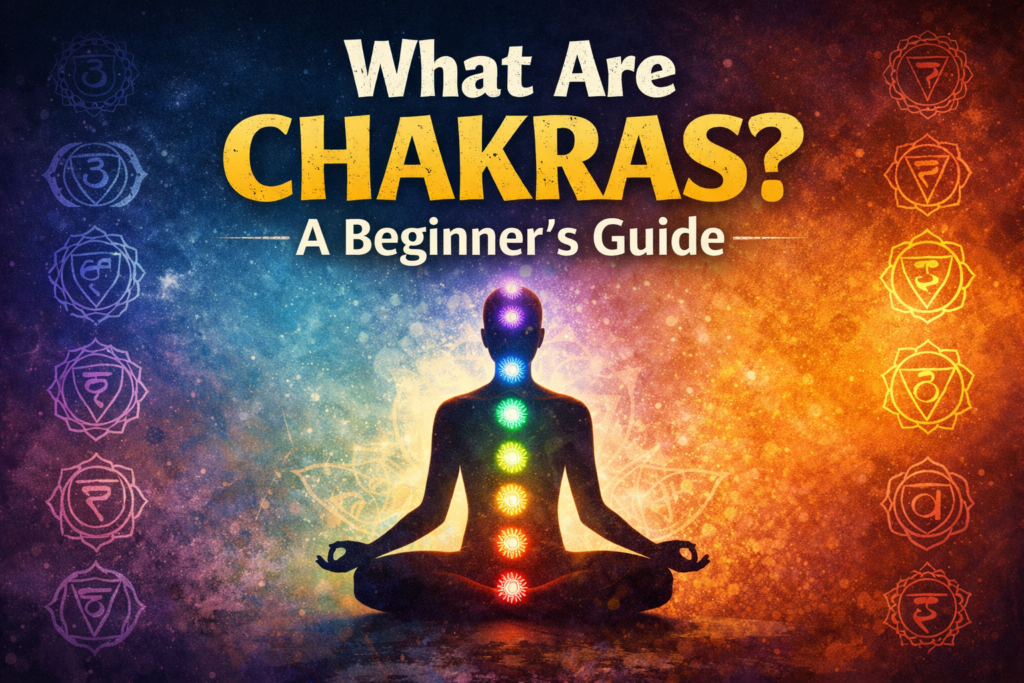
What Are Chakras? A Beginner’s Guide
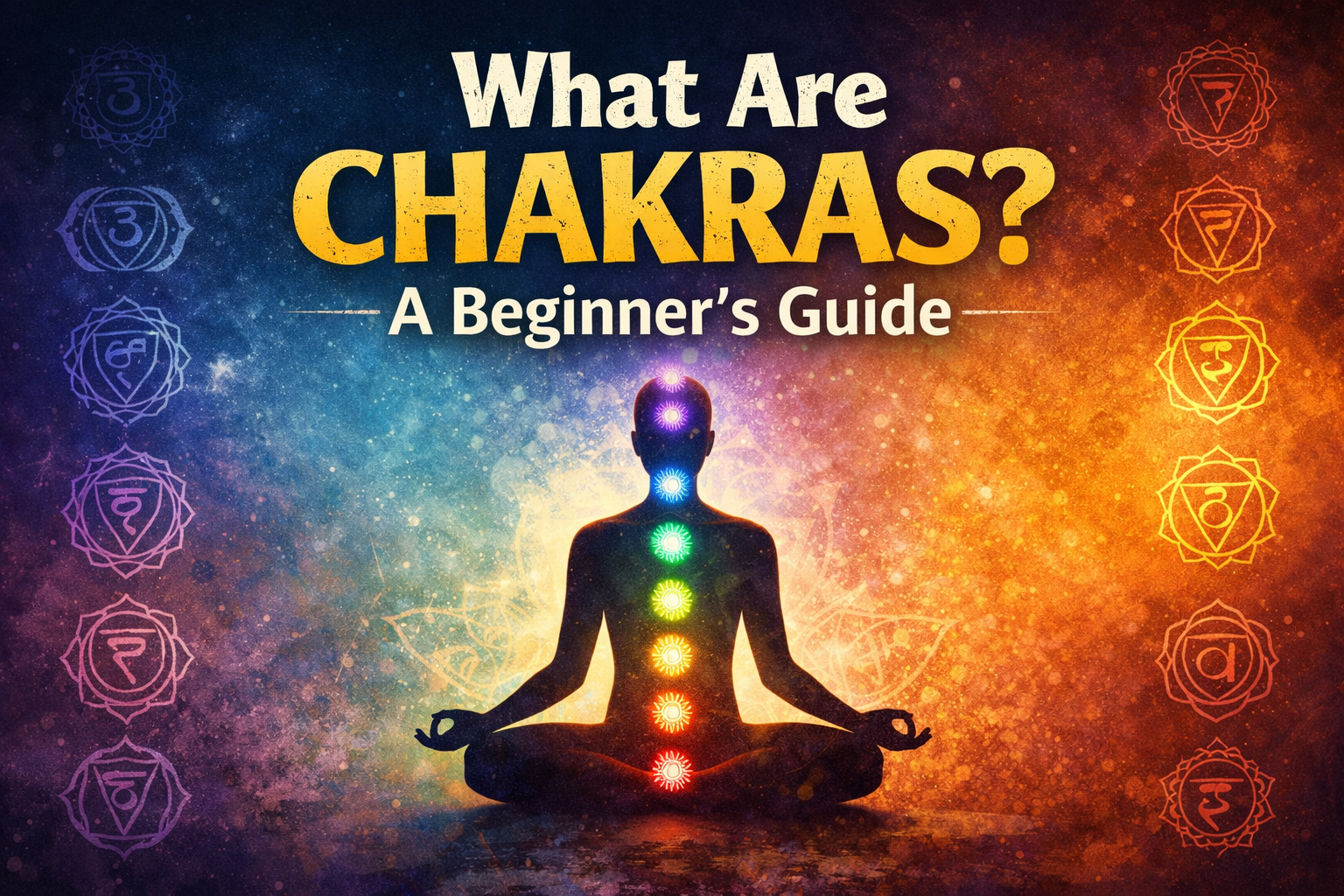
Chakras are the main ener5gy centres that are located along the spine, but are not visible to naked eyes. These are located from base of the spine to the crown of the head. These chakras act as a main point for physical, emotional, and spiritual wellbeing. These originated from ancient Indian Tantric traditions, these Chakras are seven main energy centres, these spinning wheels(prana) or energy centres influence, well balanced, mental clarity, emotional stability.
The Seven Main Chakras
1. Root Chakra (Muladhara):
The Root Chakra, or Muladhara in Sanskrit, is the first energy centre located at the base of the spine/pelvic floor, governing feelings of safety, security, stability, and grounding. Associated with the color red and the earth element, it acts as the foundation for the entire chakra system. A balanced root chakra promotes physical health and emotional stability, while an imbalanced one may cause anxiety, fear, and insecurity.
Key Aspects of the Root Chakra:
- Location: Base of the spine, tailbone area, or perineum.
- Colour: Red.
- Element: Earth.
- Governs: Basic needs (food, shelter), physical safety, financial security, and connection to the physical world.
- Balanced Symptoms: Feeling grounded, secure, stable, confident, and physically energetic.
- Imbalanced Symptoms: Anxiety, fear-based thoughts, feeling ungrounded, financial insecurity, constipation, or lower back pain.
How to Balance the Root Chakra:
- Physical Activity: Yoga poses like Mountain Pose (Tadasana), Warrior Pose (Virabhadrasana), or Child’s Pose (Balasana).
- Grounding: Walking barefoot on grass or dirt, connecting with nature.
- Diet: Eating red-colored foods (beets, apples, red peppers) or root vegetables.
- Meditation: Using the seed mantra “LAM” and focusing on the color red.
- Affirmations: “I am safe,” “I am grounded,” “I trust the universe to support me”.
- Physical Associations:
The root chakra is associated with the hard parts of the body, including the bones, joints, spine, and teeth. It also relates to the immune system and the excretory system
2. Sacral Chakra (Svadhisthana):
The sacral chakra (Svadhisthana) is the second energy canter, located in the lower abdomen/pelvis, governing creativity, sexuality, pleasure, and emotions. Associated with the colour orange and the element of water, a balanced chakra fosters joy, passion, and emotional flow, while imbalances may lead to guilt, fear of change, or emotional instability.
Key Aspects of the Sacral Chakra:
- Location: Lower abdomen, about two inches below the navel.
- Colour: Orange.
- Element: Water.
- Governs: Creativity, sensuality, relationships, and emotional intelligence. Emotions, pleasure, sexuality, creativity.
Signs of Imbalance:
- Blocked/Underactive: Low libido, lack of creativity, emotional numbness, fear of intimacy, and rigidity.
- Overactive: Emotional instability, addictive behaviours, excessive attachment, and co-dependency.
Balancing the Sacral Chakra:
- Yoga Poses: Hip-opening poses like Bound Angle Pose (Baddha Konasana) Goddess Pose (Utkata Konasana), and Pigeon Pose.
- Activities: Journaling, dancing, swimming, or spending time near water.
- Affirmations: “I am creative” “I honour my body” “I allow pleasure into my life”, “I deserve pleasure and joy.”
- Nutrition: Orange foods like oranges, carrots, and sweet potatoes.
- Meditation: Visualizing a vibrant orange lotus in the lower abdomen while chanting the seed mantra “VAM”
3. Solar Plexus Chakra (Manipura):
he Solar Plexus Chakra (Manipura) is the third energy centre, located in the upper abdomen/navel area, representing personal power, self-esteem, willpower, and confidence. Associated with the colour yellow and the fire element, it governs metabolism and digestion. A balanced chakra fosters empowerment, while imbalances cause low confidence, anger, or anxiety.
Key Aspects of the Solar Plexus Chakra:
- Location: Upper abdomen (around the diaphragm/navel area).
- Colour: Yellow.
- Element: Fire (representing energy, transformation, and warmth).
- Symbolism: Known as Manipura (city of jewels), it represents inner strength and vitality.
- Key Themes: Personal power, self-esteem, identity, willpower, and digestion.
Signs of Imbalance:
- Blocked/Underactive: Low self-esteem, lack of confidence, feeling powerless, passive, or inability to take action.
- Overactive: Aggression, controlling behaviour, perfectionism, and stubbornness.
How to Balance the Solar Plexus Chakra:
- Yoga Poses: Focus on poses that strengthen the core, such as Boat Pose (Navasana), Plank, and Bow Pose.
- Breathwork: Utilize “Breath of Fire” (Kapalabhati) to activate energy.
- Affirmations: Use statements like “I am strong” “I am confident” and “I am worthy”.
- Colour/Nature Therapy: Visualize a yellow light in the navel area or spend time in the sun.
- Actions: Set healthy boundaries, practice decision-making, and do things that build self-confidence.
4. Heart Chakra (Anahata):
The Heart Chakra, or Anahata in Sanskrit, is the fourth energy center located in the center of the chest, acting as the bridge between lower physical and upper spiritual chakras. Associated with the colour green and the element of air, it governs love, compassion, empathy, and forgiveness. When balanced, it fosters deep, unconditional love and inner peace.
Key Aspects of the Heart Chakra (Anahata):
- Location: Center of the chest, near the physical heart/sternum.
- Meaning: “Unstruck” or “unhurt”.
- Qualities: Love, compassion, joy, empathy, and emotional balance.
- Element: Air.
- Colour: Green
- Mantra: The seed syllabi is YAM
Signs of Imbalance:
- Blocked/Closed (Deficient): Feelings of jealousy, loneliness, anger, bitterness, fear of intimacy, or holding onto grudges.
- Overactive (Excessive): Co-dependency, becoming too demanding in relationships, lack of boundaries, or suffocating love.
How to Balance the Heart Chakra:
- Meditation & Breathing: Practicing heart-centered meditation, focusing on compassion, and using breathwork.
- Yoga Poses: Heart-opening poses like Camel Pose (Ustrasana), Bridge Pose (Setu Bandhasana), and Cobra Pose (Bhujangasana).
- Affirmations: Using mantras such as “I am worthy of love,” “I forgive myself and others,” and “I give and receive love freely”.
- Actions: Practicing self-care, engaging in acts of kindness, and spending time in nature.
5. Throat Chakra (Vishuddha):
The throat chakra (Vishuddha) is the fifth primary energy center, located at the base of the throat, governing communication, self-expression, and truth. Associated with the color light blue, it connects the heart to the mind and acts as a “tollbooth” between emotions and intellect. A balanced chakra allows for honest, clear, and confident expression.
Key Aspects of the Throat Chakra (Vishuddha):
- Location:Center of the throat/larynx, affecting the thyroid, parathyroid, jaw, and neck.
- Significance:It is the center of personal truth, creativity, listening, and speaking one’s authentic voice.
Balanced Symptoms:
- Open, honest communication, effective listening, creative expression, and a strong, steady voice
Blocked/Imbalanced Symptoms: Fear of speaking, anxiety, difficulty expressing thoughts, or extreme silence. Physically, it can manifest as a sore throat, thyroid issues, or neck tension.
- Overactive Symptoms:Talking too much, interrupting others, or being argumentative.
Healing and Activation Techniques:
- Sound (Mantra):Chanting the seed sound “Ham” (pronounced ha-n-gm) vibrates the throat area.
- Yoga Poses:Fish Pose (Matsyasana), Shoulder Stand (Sarvangasana), Plow Pose (Halasana), and Camel Pose (Ustrasana).
- Colour Therapy:Visualizing a bright blue light in the throat area or wearing blue, such as turquoise or aquamarine.
- Activities:Singing, chanting, journaling, and practicing open communication.
- Mudras:The Vishuddha Mudra (interlocking fingers inside hands with thumbs touching)
6. Third Eye Chakra (Ajna):
he Third Eye Chakra, known as Ajna in Sanskrit, is the sixth primary energy center, located between the eyebrows and associated with intuition, imagination, and higher wisdom. It acts as a portal for mental clarity, spiritual insight, and perception beyond the physical world. It is associated with indigo, the element of light, and the pineal gland.
Key Aspects of the Ajna Chakra:
- Purpose:Governs intuition, self-awareness, visualization, and inner wisdom.
- Symbolism:Represented by a two-petaled lotus, symbolizing the balance of duality (conscious and unconscious mind).
- Balanced State:When open, one experiences strong intuition, clarity of thought, and a heightened sense of purpose.
- Imbalanced State:A blocked or imbalanced Third Eye may lead to confusion, headaches, nightmares, cynicism, and an inability to see the “bigger picture”.
- Activation Methods:Techniques include yoga poses (Child’s Pose, Headstand), meditation focused on the brow, chanting the mantra “Om” and using affirmations.
Signs of Imbalance:
- Mental:Lack of focus, inability to make decisions, and cynicism.
- Physical:Headaches, migraines, sinus issues, and eye strain.
How to Activate and Balance:
- Meditation:Concentrate on the space between the eyebrows, focusing on the breath.
- Yoga:Practicing poses that bring the head close to the ground, such as Child’s Pose (Balasana) or Headstand (Sirsasana).
- Colour Therapy:Visualizing the colour indigo or wearing it to stimulate this chakra.
- Affirmations:Using phrases like “I trust my inner wisdom and intuition”.
7. Crown Chakra (Sahasrara):
The Crown Chakra, or Sahasrara, is the seventh and topmost energy center located at the crown of the head, representing pure consciousness, divine connection, and spiritual enlightenment. Associated with the color violet or white, it governs the brain, pituitary gland, and overall spiritual well-being.
Key Aspects of the Crown Chakra:
- Meaning:Known as the “thousand-petaled lotus” it signifies infinite, universal connection and the seat of divine awareness.
- Location:The very top of the head.
- Colour & Element:Violet (or white/gold) and associated with thought or pure consciousness.
Balanced State: Feeling connected to a higher power, experiencing unity, inner peace, and a sense of purpose.
Imbalanced State:
- Blocked/Underactive:A feeling of being ungrounded, disoriented, or cynical, along with a lack of spiritual connection and depression.
- Overactive:Disconnection from the body, extreme detachment from reality, or confusion.
How to Balance the Crown Chakra:
- Meditation:Visualizing a white or violet light at the top of the head.
- Yoga Poses:Headstand (Sirsasana)Rabbit Pose (Sasangasana), and Corpse Pose (Savasana).
- Affirmations:Focusing on statements like “I am one with the universe” or “I am guided by higher wisdom”.
- Essential Oils:Using oils such as Frankincense, Sandalwood, Lavender, or Lemon.
- Lifestyle:Connecting with nature, using crystals, or incorporating specific colors into food and clothing.
The Crown Chakra is often considered the body’s “operating system” controlling our beliefs and perceptions of reality.