Top Myths About Electric Vehicles in India
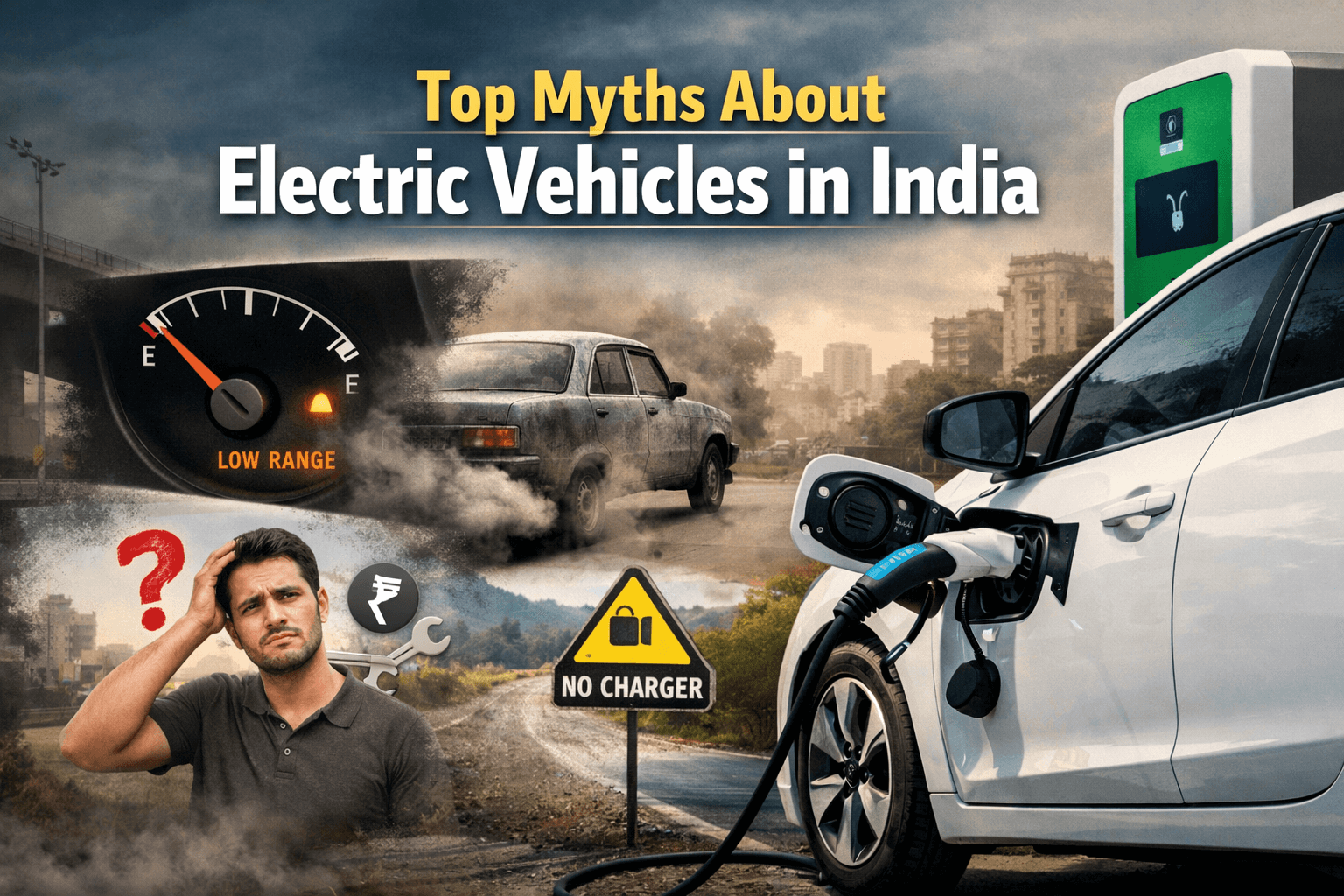
The common Myths about EV’s that we see in India are -High costs, Low Range, Low Charging Time and Poor Infrastructure. As the technology has improved, EV’s offer Reduce in Total Cost of Ownership, Improved in ranges in City limits and Long Travels and Fast Charging stations along with Increase in Safety Features of the vehicle.
Here is the top EV myths in India:
Myth 1: EVs are costly
The cost of the EV is higher; compare to petrol vehicles the cost fuel is very low and also the service maintenance is low. The cost of running an EV and Petrol Vehicle is below
- Electricity cost: ~₹1–1.5/km
- Petrol cost: ~₹7–10/km
- Maintenance: 40–60% lower
Even EV’s are getting subsidies from government and also has lower GST and also road tax exemption in several states.
Myth 2: Limited range for long trips.
Most modern EVs in India offer 200–500 km per charge, which is more than enough for daily use (Average ride per day is about 30 km) easily covering city commutes and popular highway routes.
Myth 3: Charging takes too long and is inconvenient.
Fast chargers can charge 80% of the battery in roughly 30–60 minutes, while overnight home charging is ideal for daily needs.
Myth 4: Poor charging infrastructure.
We can find Charging stations in highways, in malls, in Petrol Pumps and in showrooms also and also government is aggressively expanding the charging stations to cater the needs. Most of the Vehicles are charged at home, just like a phone.
Myth 5: EV batteries degrade quickly/dangerous.
The batteries which are installed inside EV are designed for long life ( 8 to 10 years life). Batteries are designed for long life (8-10+ years) and modern EVs come with advanced thermal management, complying with strict safety standards. Modern batteries degrade slowly and can be expanded to use for around 10 to 15 years with normal use.
As the days go by the price of the battery Is reduced.
Myth 6: Not safe to drive in water/rain.
EVs go through various tests before launching where in now EV’s have IP67 or higher rates which means they are well sealed, waterproof and can be used in heavy monsoons. In fact, EVs are often safer than ICE vehicles in floods because there’s no air intake to suck in water.
Myth 7: Slow performance
Electric motors provide instant torque, no gear changes, no lag. It feels quick acceleration than most conventional vehicles. The Indian EV market is maturing, making these vehicles a reliable and cost- effective choice for modern mobility needs. Once you drive an EV, going back feels… slow
Myth 8: EVs Catch Fire Easily
As we take statistics the chances of catching EV are lesser than the petrol or diesel vehicles. Because the EV’s are new to thew market, if caught fire then it makes headlines as they are not common. Safety standards and battery tech have improved significantly after early incidents.
Myth 9: EVs Are Hard to Repair
EVs have few parts than petrol/diesel cars. That means:
- There will be Less wear and tear
- There will be fewer service visits
- The service bills will be very much low.
As EV’s are increasing we can find trained technician and also, they are expanding in India.
Myth 10: EVs Aren’t Really Eco-Friendly in India
Reality: EV’s produce 35 to 40 % lower life time emissions than Petrol or Diesel Vehicles and this helps in improving air quality.
Conclusion:
EVs in India are practical, economical, safe, and future-ready. Most of myths come from old generations when EV’s were launched. The information now doesn’t hold good now, as there is significantly improve in EV’s.


