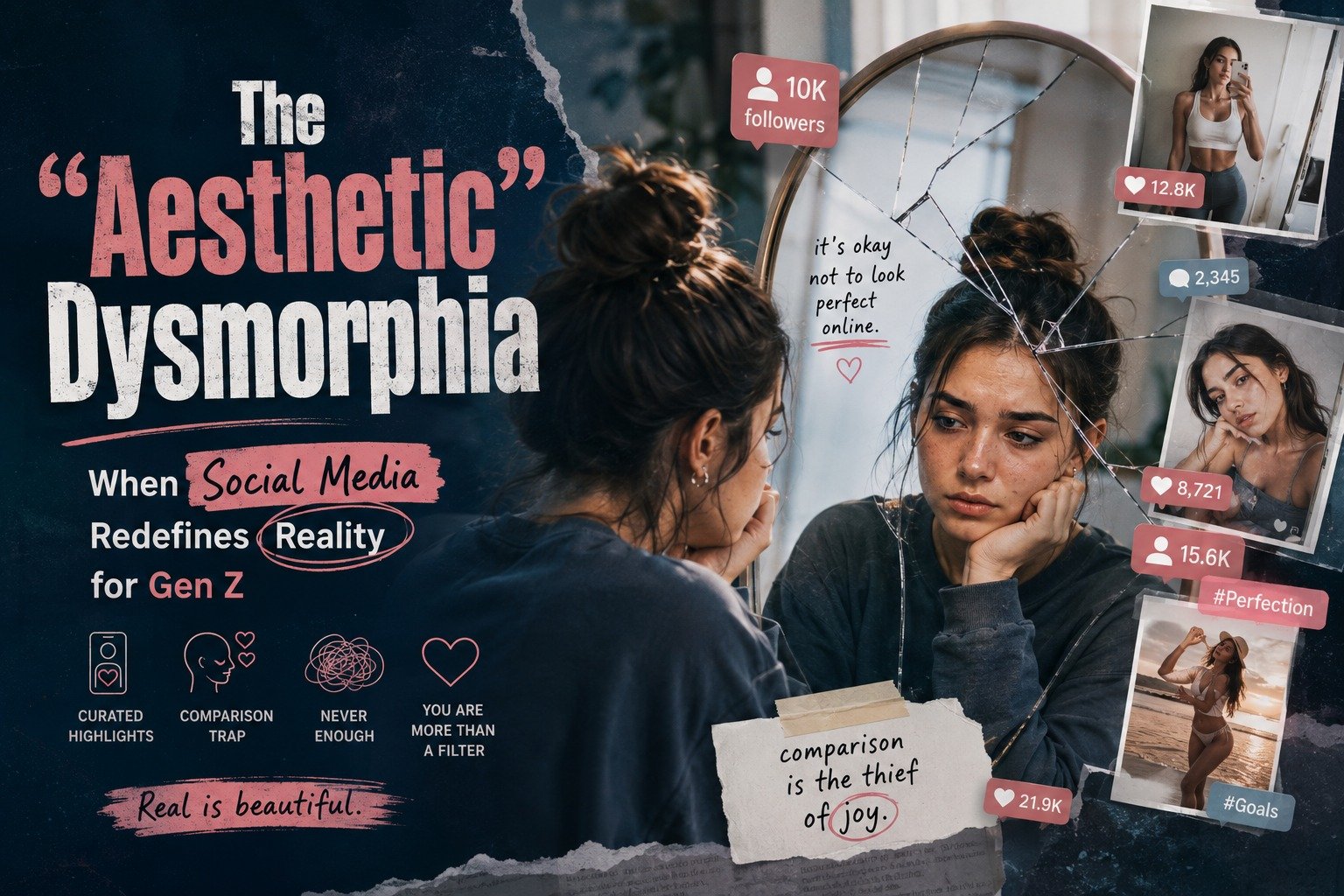
The "Aesthetic" Dysmorphia: When Social
Media Redefines Reality for Gen Z
Perfection is trending but authenticity is timeless , The best version of
yourself is the one that doesn’t need a filter.
Every day, millions of Gen Z girls begin their mornings with a “Get Ready With Me”(GRWM) video. In just a few minutes, they see flawless skin, spotless bedrooms,expensive skincare products, perfectly styled outfits, and seemingly effortless lives.While these videos can be entertaining and inspiring, they are also creating a newchallenge Aesthetic Dysmorphia.
This isn't a medical diagnosis, but it describes a growing mindset where constant
exposure to highly edited and carefully curated content distorts what young people
believe is "normal." It goes beyond body image. It affects how they view their homes,
routines, friendships, and even their self-worth.
Unlike reality, social media shows only the highlights. Bedrooms appear perfectly
organized, skin appears pore less under filters, and every morning routine seems
productive and glamorous. Behind the scenes, however, there may be ring lights,
editing apps, multiple retakes, and sponsored products.
The problem begins when comparison replaces appreciation.
Many young girls start believing that their room isn't beautiful enough, their skin isn't
clear enough, or their lifestyle isn't exciting enough. They compare their everyday
reality with someone else's carefully edited content. Over time, this can lower self-
confidence and create unnecessary pressure to achieve an impossible standard.
Seventeen-year-old MARINA loved watching GRWM videos every morning.
Gradually, she became unhappy with her own room because it didn’t resemble thePinterest-inspired spaces she saw online. She also spent money on skincare products,convinced her natural skin texture was a flaw.
During a school media literacy session, a content creator demonstrated how lighting,
filters, and editing completely transformed ordinary videos into "perfect" content.
That day, Marina realized she had been comparing her real life to someone else's
edited version of reality.
Instead of chasing perfection, she began focusing on healthy habits, confidence, and
gratitude. She even reduced her screen time and followed creators who promoted
authenticity over aesthetics.
Choosing Reality Over Perfection
Social media isn't the enemy. The problem arises when we forget that it is designed to
showcase the best moments not the whole story.
Real skin has pores.
Real bedrooms get messy.
Real people have bad days.
And that's completely normal.
Parents, educators, and young people must encourage digital awareness by discussing
how online content is created. Following authentic creators, limiting screen time, and
practising gratitude can help protect self-esteem in a world driven by filters and
trends.
The "Aesthetic Dysmorphia" trend is a reminder that perfection online is often
carefully created, while real life is beautifully imperfect. Instead of chasing an
unrealistic image, Gen Z should celebrate individuality, confidence, and self-
acceptance.
The greatest glow-up isn't having the perfect bedroom, flawless skin, or the most
aesthetic lifestyle. It's learning to appreciate who you are without comparing yourself
to a filtered version of someone else's life.
Because in the end, authenticity will always outshine perfection.




Well written 👏👏👏