Petrol vs Electric Vehicles: Which Is Cheaper for Indian Families?
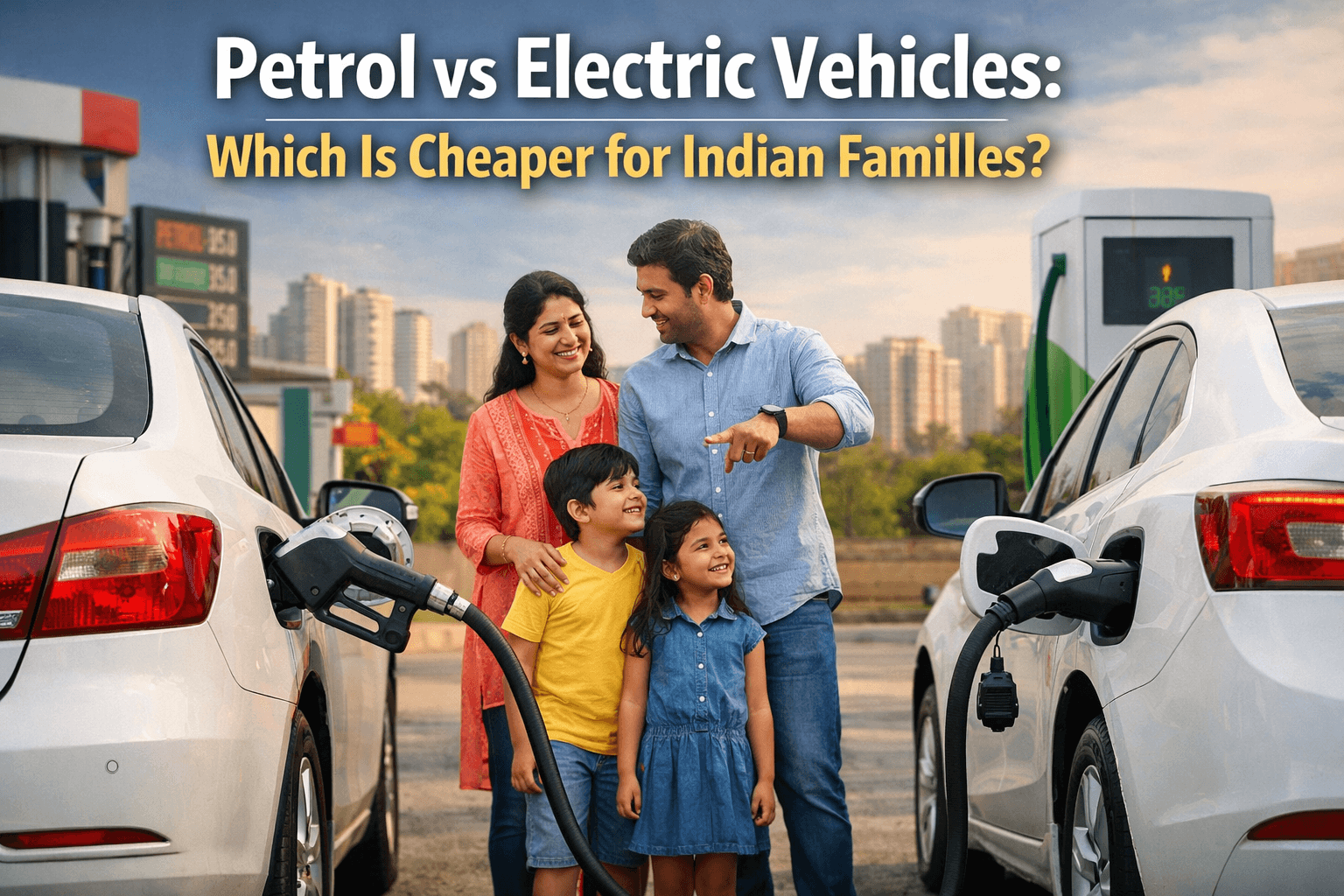
As we consider Indian families, major population are higher middle class or middle class. Electric Vehicles (EVs) are cheaper in the long run due to significantly lower running (fuel/charging) and maintenance costs, even though the purchasing price is higher, and the purchasing cost of petrol car is cheaper than EV’s, but the day-to-day expenses are high, and buy EV’s has advantage of taking subsidies from government for a long term investment.
For most urban Indian families who drive regularly, EVs tend to be cheaper to run and maintain over the long run, even if the upfront cost is somewhat higher. The exact savings depend on your annual km, access to home charging, and local EV incentives.
Here the following points that can been seen if you are focused on buying EV’s.
1. Initial Cost:
Petrol Vehicles:
We can buy immediately at a cheaper price, as the technology of the vehicle is well known and battery is not a major part.
- Small cars we can buy at a mere price of 4 to 5 lakhs Rupees.
Electric Vehicles:
- The cost of buying EV’s is costly as you can get it from Rupees 7 lakhs to 20 lakhs depending upon the model you buy.
- But as we know the government is giving various incentives which helps in cutting the purchasing cost — The subsidies, reduced GST (5% vs 28% on petrol), state tax/registration waivers, and tax deductions on EV loans which helps EV’s in purchasing the cost which comes to closer rate as petrol after taking benefits provided by government.
Main Point:
Petrol is cheaper to buy without incentives, but the government subsidies + tax benefits narrow the gap for EVs.
2. Fuel Costs:
This is a major biggest saving area
Petrol Vehicles:
- Petrol prices around ₹100 per litre.
- The petrol car uses around ₹5–₹8 per km in fuel.
Electric Vehicles:
- Charging at home costs roughly ₹1–₹2 per km, even with minimum electricity rates.
- If we charge in public Charging Point then the cost per unity is around ₹15–₹25 per kWh, but the price is still cheaper per km than petrol. but still cheaper per km than petrol.
Example (10,000 km/year):
| Vehicle | Fuel/Charging Cost per Year |
| Petrol car | ₹70,000–₹85,000 |
| EV (home charging) | ₹7,000–₹20,000 |
You could save about ₹70,000–₹85,000 annually just on energy costs by using an EV.
3. Maintenance Costs:
Petrol Vehicles:
- As we know petrol vehicle has engine you require various service to run smoothly like regular oil changes, filters, spark plugs, clutch/gearbox servicing etc.
- The cost of maintaining the vehicle might be ₹10,000–₹15,000 per year.
Electric Vehicles:
- As there is no engine and the parts are very less there will less expense.
- The cost of EV maintenance: ₹4,000–₹7,000 per year.
4. Insurance and Taxes:
- The insurance for EV’s is a bit higher than petrol because of higher battery packs. Even though IRDAI allows discounts on third party premiums.
- GST & registration: EVs GST is 5% vs Petrol GST is 8%+ cess, and many states waive road tax, saving thousands.
5.Cost of Ownership (TCO) – Example Over 5 Years:
Even if the EV costs more upfront, lower running costs + incentives can make it cheaper over time:
| Cost Element | Petrol | EV |
| Upfront Price | Lower | Higher (but reduced by incentives) |
| Fuel/Energy | High | Low |
| Maintenance | Higher | Lower |
Road Tax & Registration Standard Often reduced
Many analyses show that over 5 years, an EV’s total cost of ownership can be significantly lower.
6. Other Factors to Consider:
A. Charging Infrastructure:
- Like petrol bunks charging unit are very less in many cities and towns. It is still in growing phase.
- Home charging is cheapest but requires a proper parking point and charger.
B. Battery Life & Replacement:
- EV battery warranties are given for 8 years or more depending upon the model you buy.
- If you want to add new battery after warranty the cost will be very high, where is you have it plan it for long term ownership.
C. Resale Value:
- Petrol cars market is very well grown since many years. There will no issues in reselling the vehicle.
- EV resale values are evolving — improving as demand grows.
Bottom Line for Indian Families:
| Factor | Petrol | Electric |
| Initial Buying Cost | Typically, cheaper | Higher but narrowing with incentives |
| Fuel/Energy Cost | High | Much lower |
| Maintenance | More frequent and costly | Lower |
| Ownership Cost Over Years | Higher with fuel + service | Generally lower |
| Convenience (Easy Refuelling) | Strong | Improving |
| Environmental Impact | Higher emissions | Lower emissions |
Long-Term Value:
- EVs: Often more economical over 3 5 years due to substantial savings on fuel and maintenance, making them a smart investment.
- Petrol Vehicles: Daily costs add up quickly, impacting long-term savings.