How New MSP Reforms Are Impacting Farmers in 2026
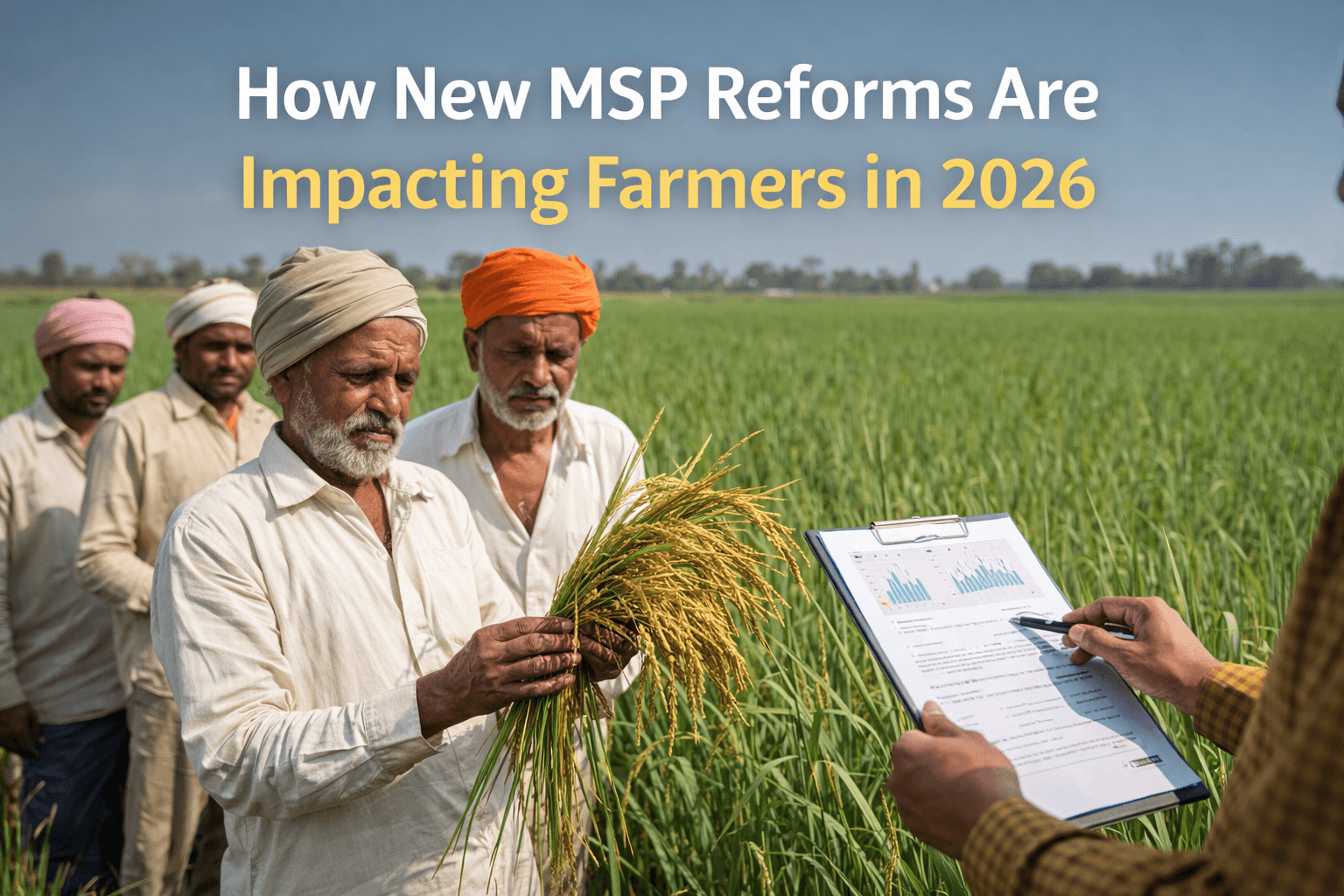
In 2026, new Minimum Support Price (MSP) reforms, is very necessary to provided assured income for the crops grown by the farmers and also encourages to crop diversification, away from water- intensive crops. The government’s strategy links MSP to national self-sufficiency in key crops like pulses and oilseeds.
Key Factors impacting Farmers
Increased Income and Price Security:
The benefit farmer gets is farmer will be getting the minimum price for the crop grown by them from the government which helps them in selling the produce and it gets relaxation from price fluctuations. The government has set MSPs at a stage where at least 40 to 50% margin are given to farmers all over the country weighted average cost of production (A2+FL cost).
Promoting Crop Diversification: The higher MSP’s factor is very much essential for pulses, oil seeds and cereals which shifts farmers from growing dominant crops like paddy and wheat. This helps in promoting the climate-resilient farming and helps in reducing India’s import dependence on items like pulses.
Procurement and Coverage: The government main agenda is to focus on procurement strongly. There is increasing in farmer who are getting benefit from procurement system and the amount will be directly sent to their respective bank accounts, which is transparent and it stops involvement of middlemen.
Digital Reforms: The introduction of digital platforms like e Samriddhi and the Kapas Kisan App has helped in the procurement process, which allows farmer to register online, slot booking and payments will be made immediately. By this process there will a lot of time saved as there will no paperwork and waiting for the number and delay in transactions cuts off.
Challenges:
Despite the positive developments, challenges remain:
Implementation Problem: The implementation of MSP is a very important are the policy is used only in several states and it is assigned for a smaller number of crops, leaving small farmers who has less land and has limited access to the centres, where they are not make the use of the policy fully.
Transportation: There are shortage of storage facilities and the high cost in transportation affects farmers from going to procurement centres.
Conclusion
The overall goals of the 2026 MSP framework are to support agricultural sustainability, ensure farmer income security, and assist the country in becoming self-sufficient in important commodities.