IQ and Chess: How Intelligence Really Matters
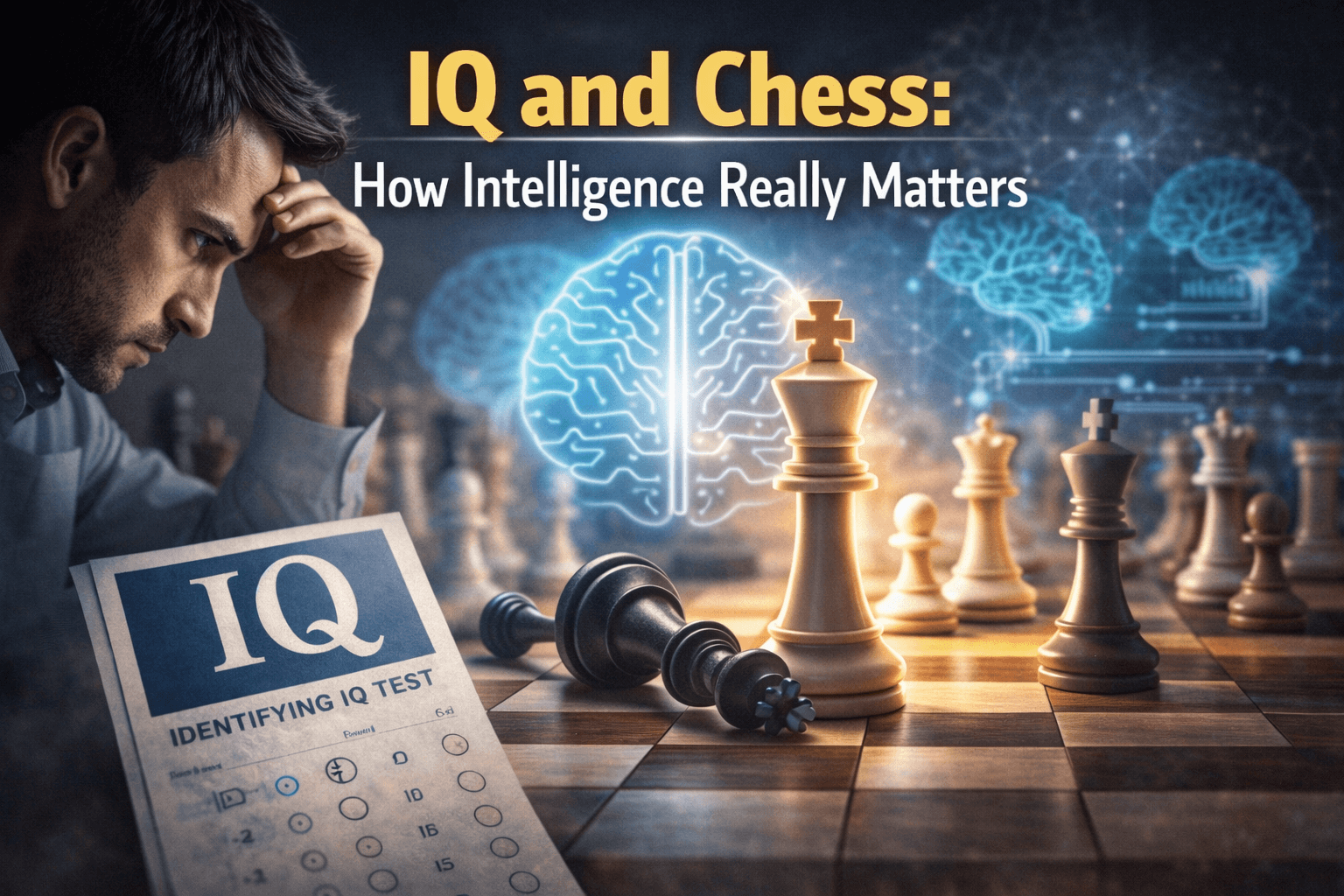
Chess is a game where in you have to use your intelligence as itr is mind game. The strong Chess play is assumed to be directly related to IQ. There is a relation between Chess and IQ.
What IQ Measures - and What It Doesn’t
IQ (Intelligence Quotient) is used to measure logical reasoning, working of the memory, pattern recognition, processing speed of the brain and so on. These skills match with the chess for calculation of moves and for recognition of the pattern. However, IQ tests do not measure many abilities that are crucial for chess mastery, such as long-term learning, emotional control, motivation, or creativity.
IQ and Beginner to Intermediate Chess
Research has been conducted to see that IQ has a more influence at the basic level and intermediate level of the chess. Those who have high IQ learn chess quickly and they make very less mistake and adapt to the game quickly, and they make less mistake compared to those who have less IQ.
Why IQ Matters Less at the Top
At advanced and elite levels, the correlation between IQ and chess strength becomes much weaker. Many grandmasters in chess have low or above average, but their performance is very excellent. What Chess Players do is
- Extensive Practice approximately 10000 to 20000 hours.
- They study thousands of positions which which helps in developing memory.
- Under time pressure they develop psychological toughness.
To put it another way, mastery in chess becomes quite specialised. The benefits of having more IQ fade once players reach a particular level of intellect.
Pattern Recognition Over Pure Calculation
Chess player do not calculate each and every move, they move on pattern recognition _ they recognise structures, tactical moves and strategic ideas. They gain knowledge and they are exposed to the game since long term rather than general intelligence alone.
Emotional and Psychological Factors
Chess is a mental game and emotionally intense. Players handle stress, time pressure , losses and develop focus for hours. The above factors have very little connection with IQ but helps in performing better, during tournaments.
The Myth of the “Chess Genius”
The idea that chess skill is mainly a product of genius discourages many potential players. In reality, progress in chess is far more dependent on training quality, consistency, and mindset than on IQ. Many strong players began as average learners but improved steadily through disciplined study.
Conclusion:
IQ can help in chess, especially early on, but it is neither a requirement nor a guarantee of success. Chess skill is best understood as a form of acquired expertise, built through practice, experience, and psychological strength. Intelligence opens the door—but dedication and learning determine how far a player walks through it.





Hahahaha You are so good