Reiki: Healing Energy for Mind, Body, and Soul
As the world is moving faster and as the technology is improving, the people are looking for faster results. Many people want to heal themselves quickly as there is no time now a days and they are turning towards holistic healing practices.
One such holistic practice is Reiki—a Japanese energy healing technique that promotes relaxation, balance, and emotional well-being. Reiki carries profound benefits for those open to receiving it.
What Is Reiki?
Reiki (pronounced ray-key) comes from two Japanese words:
- Rei – universal or spiritual wisdom
- Ki – life force energy
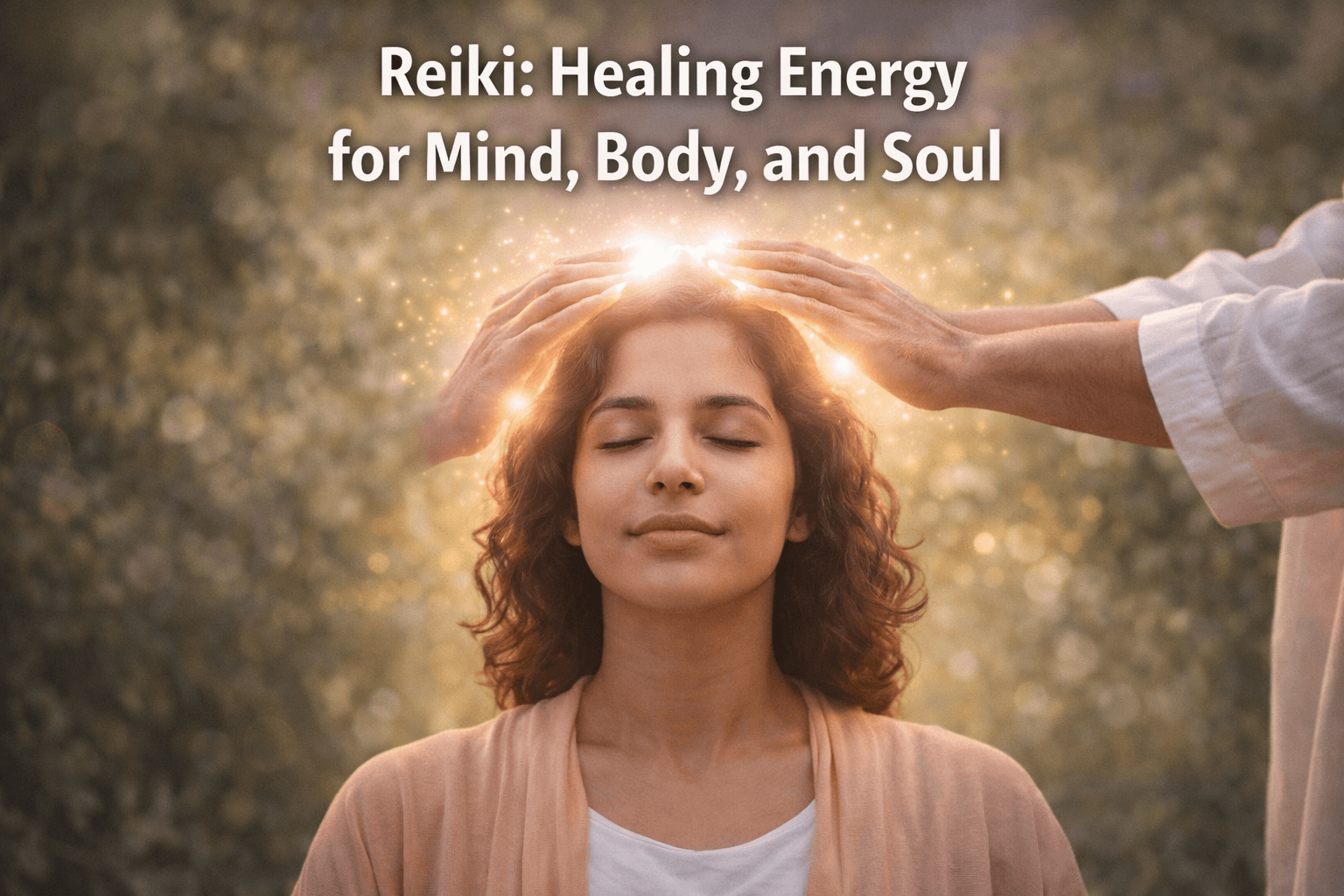
Reiki is based on the idea that a universal life energy flows through each and all living things on earth. When the energy which we carry is blocked or removed, there will be discomfort mentally, emotionally or even physically. Reiki practitioners use gentle hand placements (either lightly touching or hovering above the body) to channel energy and help restore balance.
The Origins of Reiki
Reiki was developed in the early 1900s by Dr. Mikao Usui in Japan. Reiki is simple and powerful to heal internally and bring harmony in your life. As the time passed, Reiki spread worldwide and is now practiced in wellness centres, hospitals, and homes across the globe.
How Does Reiki Work?
To do Reiki one has to take attainment from Reiki Master. Once you have attainment, you can practice as per directions given by Reiki master. A Reiki session typically lasts between 45 and 60 minutes. The recipient lies down fully clothed while the practitioner or master places their hands on or above specific areas of the body, such as the head, shoulders, abdomen, and feet.
During the session, many people experience:
- Deep relaxation
- Warmth or tingling sensations
- Emotional release
- A sense of calm and clarity
Reiki goes to the part of the body which requires healing and gets healed.
Benefits of Reiki:
Reiki is not a replacement for medical treatment; many people use it as a complementary therapy. Reported benefits include:
- Stress and anxiety reduction
- Improved sleep quality
- Emotional balance and mental clarity
- Relief from chronic pain or tension
- Enhanced sense of well-being
Reiki effects beyond physical symptoms, supporting emotional and spiritual growth as well.
Reiki and Science: What Does Research Say?
Research on Reiki is going on, results vary from person to person, several studies suggest that Reiki may help activate the parasympathetic nervous system—the body’s “rest and digest” state. This helps in reduction of stress, improving your mood. The people feel calmer after Reiki session.
Who Can Receive Reiki?
Reiki’s greatest strengths is its accessibility. Anyone can receive Reiki, regardless of age, belief system, or physical condition. It’s commonly used to support:
Professionals, Individuals experiencing emotional stress, People dealing with illness or recovery, those on a spiritual growth journey.
Reiki can even be sent remotely, known as distance healing, making it accessible no matter where you are.
Is Reiki Religious?
No. Reiki is spiritual but not religious. It does not require belief in any doctrine or deity. People of all backgrounds—religious, spiritual, or secular—practice and receive Reiki without conflict.
Final Verdict
Reiki tells us that the healing should not be forceful, but we can heal ourself by stillness, awareness and with good intention. It helps us to become calmer, it allows to connect to ourself, helps in emotional support. Reiki gives you balance in every aspect of life.
In such a noisy world Reiki helps you in slow down, breathe and brings your natural state of existence.


